Summary More than three months of US and Israeli airstrikes, and a blockade of Iranian ports, have poured new misery on a people already toiling under years of sanctions
TEHRAN (Reuters) - When Iranian Foreign Minister Abbas Araqchi announced the interim deal this week to end the war with the United States, he declared his country the victor.
To many Iranians it does not feel that way.
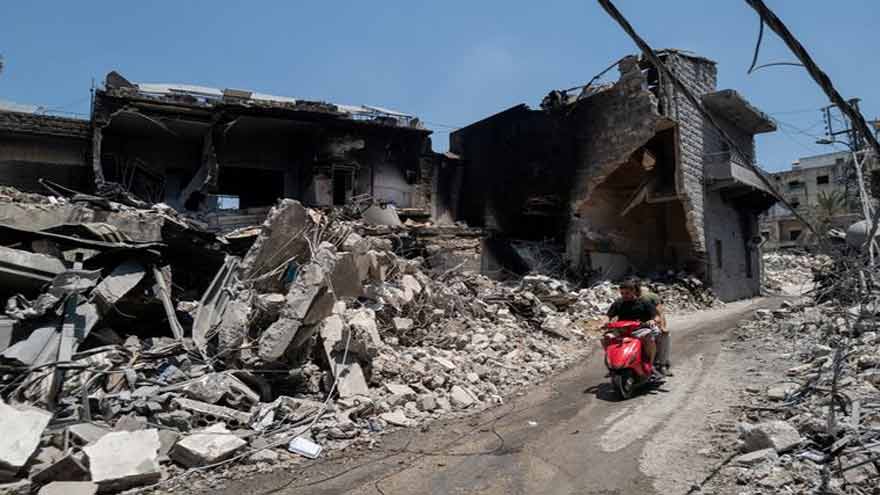
More than three months of US and Israeli airstrikes, and a blockade of Iranian ports, have poured new misery on a people already toiling under years of sanctions.
Although the war is over - for now - Iranians are still watching their spending carefully.
Few of the supporters and opponents of the Islamic Republic spoken to by Reuters this week said they believe better times are coming soon.
Some think economic anger could prompt new waves of protest against the government.
Others expect a renewed crackdown similar to the bloody suppression during the last wave of mass demonstrations in January.
And with any more lasting agreement pushed back for further talks, there is little certainty among them that the deal intended to end the war will survive the summer.
ECONOMIC MISERY
"I think 99% of people are in survival mode and just living day by day. I don’t think anybody has any hopes anymore. I don’t think anybody has any visions of what the future might look like," said Amir, 34, a media production company owner in Isfahan in central Iran.
Reuters contacted Iranians by messaging app so that they could speak freely, but Amir and others did not want to be fully identified for fear of angering the authorities. Some of the others interviewed on camera in Tehran did give their full names.
“Day by day the situation of the people, the situation of people’s livelihoods, has gotten worse rather than better. Now ask anyone, who is there who would say 'I am satisfied'?” said Mehdi Sabahi, speaking on camera near a huge portrait mourning Iran's late supreme leader, Ali Khamenei, who was killed on the first day of the war.
That gloomy outlook is not shared by hardline supporters of the Islamic Republic's ruling system, who paint the war as a victory and the Iranian nation as defiant and united, although some of them say Iran should have demanded better terms.
"It is not the case that we are very happy with this paper we have obtained. Our people want more than this, and we must tell them that we are facing such public opinion," said Saeed Ajorlou, the managing director of the daily newspaper Sohb-e No.
"Do not think that our people are tired, that our posture is one of fatigue and surrender. No, our posture is one of victory."
A cafe owner in Tehran, who described himself as being neither a supporter nor opponent of Iran's theocratic ruling system, said he believed that both Israel and US President Donald Trump would want to bomb Iran again.
"This deal that's being finalised, I don't see it as being very interesting. It doesn't seem like it's going to be long lasting," he said by messaging app.
Like most of the people Reuters spoke to, he keenly felt the fall in living standards, describing how people were reducing their spending with an increasingly common Persian expression: "We've adapted to making our table smaller".
"Everything got worse and exponentially more expensive," said a 25-year-old student in Tehran, adding that she and her friends were no longer even able to afford meeting in cafes.
FEARS OF A NEW CRACKDOWN
Anxiety about a new government crackdown is particularly intense in regions that are home to Iran's ethnic minorities where the suppression of previous bouts of protest has often been deadliest.
Three men living in Kurdistan in western Iran said the war had not only left them poorer, but had resulted in greater repression or insecurity.
"Leaving the regime in this state increases the power of the repressive institutions," said one of the men, aged 40.
He thought the bloodshed in January would put off new protests for a while but that economic pain would soon lead to new outbreaks of demonstrations.
Talk early in the war that the US would try to instigate an armed Kurdish revolt against the Islamic Republic had further worsened the situation in the region, said another of the men, a 25-year-old student.
"The war did nothing more than cause more problems for the Kurds," he said.
People outside ethnic minority areas also said the conflict might undermine prospects for more political freedoms.
Iran's ruling establishment has tried to dominate the streets since the war began, flooding city and town centres with supporters staging rallies or holding mourning events for killed leaders.
Amir, the media company owner in Isfahan, said their presence was a constant reminder of how the state intruded into daily life.
"The Islamic Republic is not going to go anywhere anytime soon. If they were entrenched before, now they’re 10 times more deeply entrenched. Any hope of reform or anything changing is basically right out the window," he said.